Our Kitchen
Kitchen Innovation
A high-efficiency model that delivers fresh, hot meals to schools at scale.
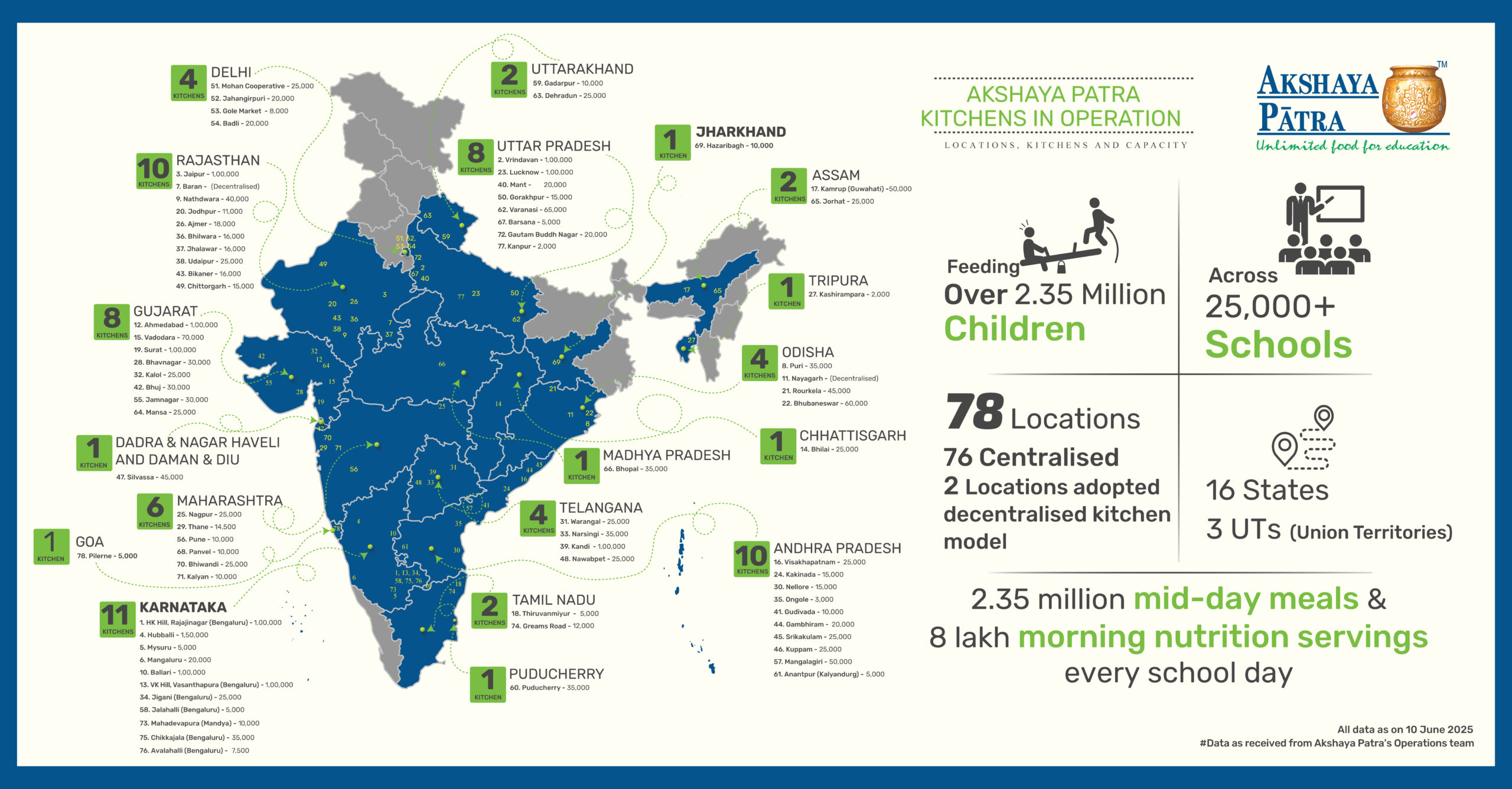
78 Kitchens Operating
21 ISO Certified
75 Quality Checks
By the Numbers
Scale That Speaks for Itself
As of 2025
78
Kitchens Operating
76 Centralized · 2 Decentralized
2.35M+
Meals Within 6 Hours
From kitchen to classroom daily
≤4hrs
Cook-to-Consumption
Hot and fresh, guaranteed
60%+
Workforce Women
Empowering local communities
75
Quality Checks
Across every production stage
21
ISO Certified Kitchens
Internationally audited quality
Our Approach
Two Kitchen Models, Built for Local Reality
⬡ Centralized
76+
Centralized Kitchens
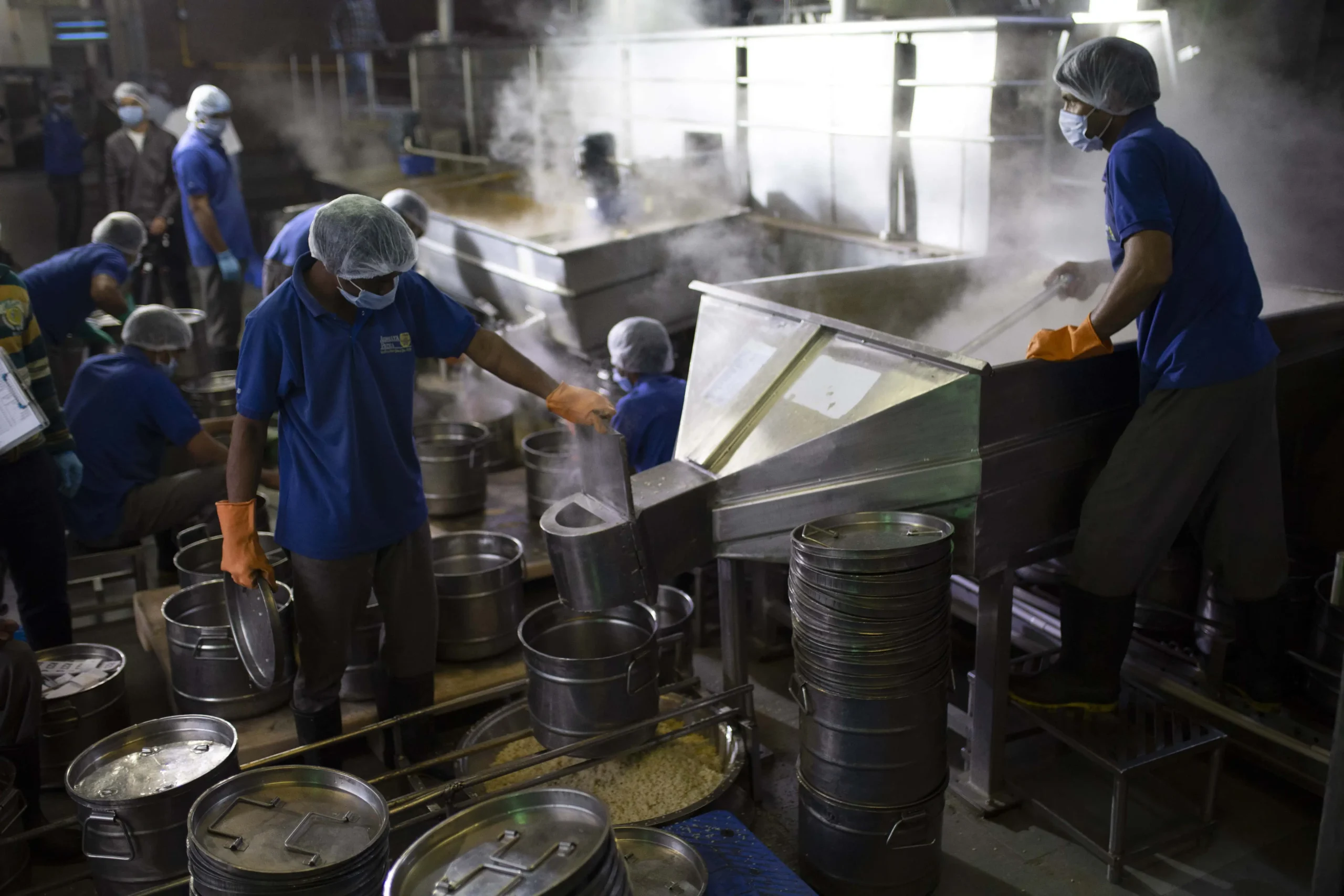
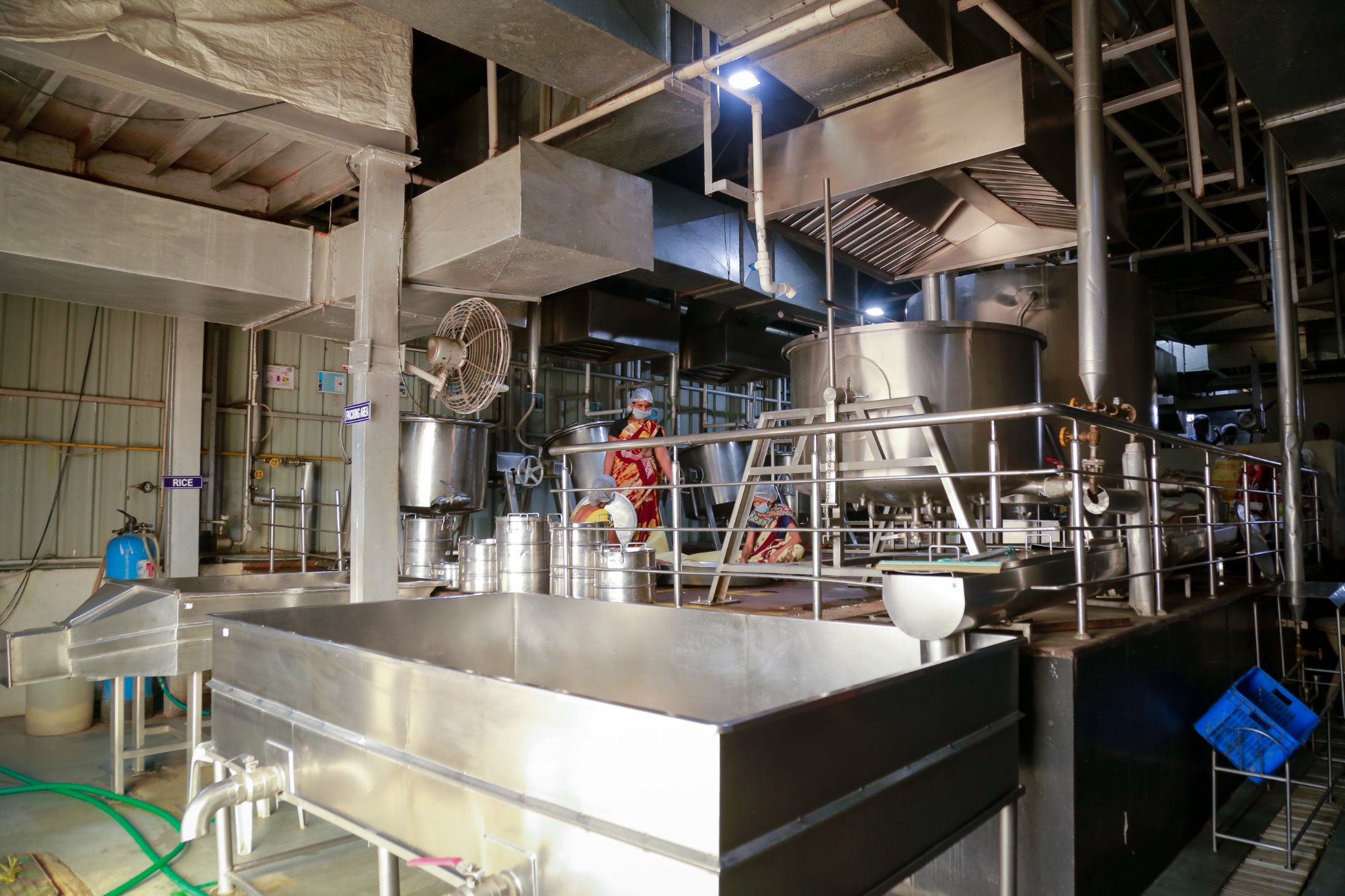
- Designed for dense school clusters with high delivery volume
- High-volume mechanized cooking with standardized processes
- Fast dispatch and route-optimized delivery to multiple schools
◎ Decentralized
2+
Decentralized Kitchens
- Used where terrain and distance make centralization impractical
- Local women prepare up to 5,000 meals daily per kitchen
- Adds sustainable livelihoods and strengthens communities
Attribute
◆ Centralized
◎ Decentralized
Capacity
High volume · mechanized
Up to 5,000 meals/day
Footprint
Large, purpose-built facility
Compact, community-based
Staffing Model
Trained workforce, shift-based
Local women, community-led
Delivery Radius
Wide — covers multiple school clusters
Narrow — serves nearby schools only
Best-Fit Geography
Urban & peri-urban dense areas
Remote, hilly, or dispersed regions
Kitchen Network
Kitchens in Operation Across India
78
Kitchens
16+
States & UTs
25k+
Schools
2.35M+
Children Daily
Food Safety
Safety, Quality, Consistency
75
Quality Checks
Rigorous checks at every stage from procurement to school delivery
65°C
Serving Temperature
Optimum 65°C — warmer meals correlate directly with higher consumption
21
ISO Certified Kitchens
Internationally audited against ISO food safety and quality management standards
75 checks across the full process
Procurement
Prep
Cooking
Packing
Dispatch
Delivery
Feedback
Serving Temperature Target
65°C
Warmer meals mean better consumption. Temperature is monitored at every delivery point.
21 ISO Certified
Kitchens meeting international standards
ISO certification means every process — from ingredient sourcing to final delivery — is independently audited against international food safety and quality management standards.
ISO 22000
Food Safety
Quality Management
Independently Audited
Innovation
Technology That Protects Every Meal
Kaizen · Six Sigma
Process Improvement
Continuous improvement methods that reduce waste, raise speed, and ensure consistency across every kitchen.
Blockchain
Full Traceability
Ingredient and supply chain visibility from farm to kitchen — every item tracked and verified end-to-end.
IoT Sensors
Real-Time Monitoring
Equipment, temperature, and process controls monitored in real time — issues caught before they affect a single meal.
GPS Routing
Route Efficiency
GPS-optimized delivery routes help every vehicle reach schools on time, minimizing delays and heat loss.
How it all connects — the meal protection pipeline
Inputs
Ingredients & sourcing
Equipment & machinery
Delivery fleet & routes
Monitoring Hub
Blockchain · IoT · GPS
Outcomes
Fresh & hot at delivery
On-time, every school day
Fully traceable & safe
The Process
From Farm to Classroom in Hours
1
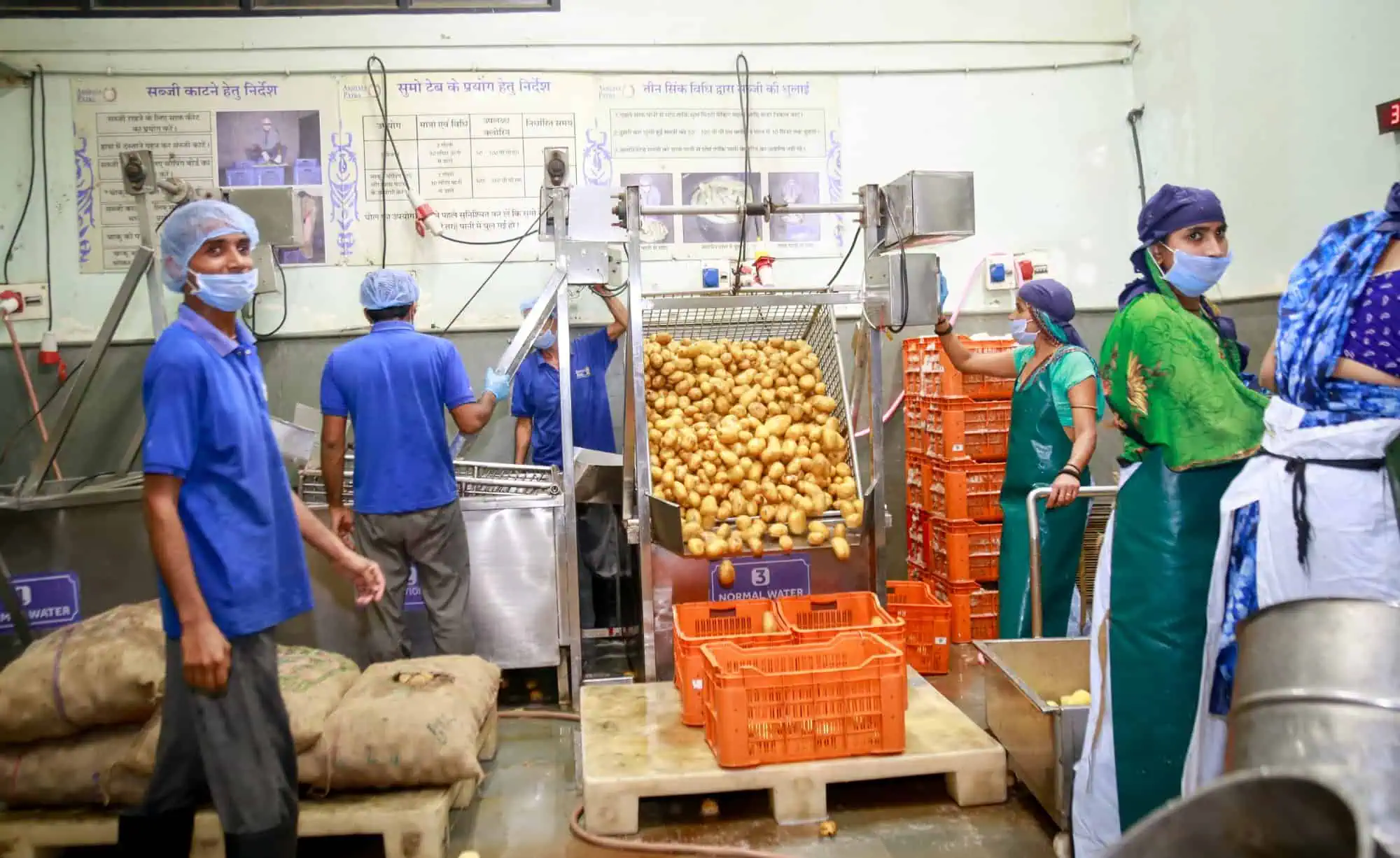
Storage & Handling
2
Quality Assurance
3
Cuisine Planning
4
Hygiene Standards
5
Packing & Transport
6
GPS Delivery
7
Feedback Loop
The 4-Hour Promise
Cook to consumption
in 4 hours or less
in 4 hours or less
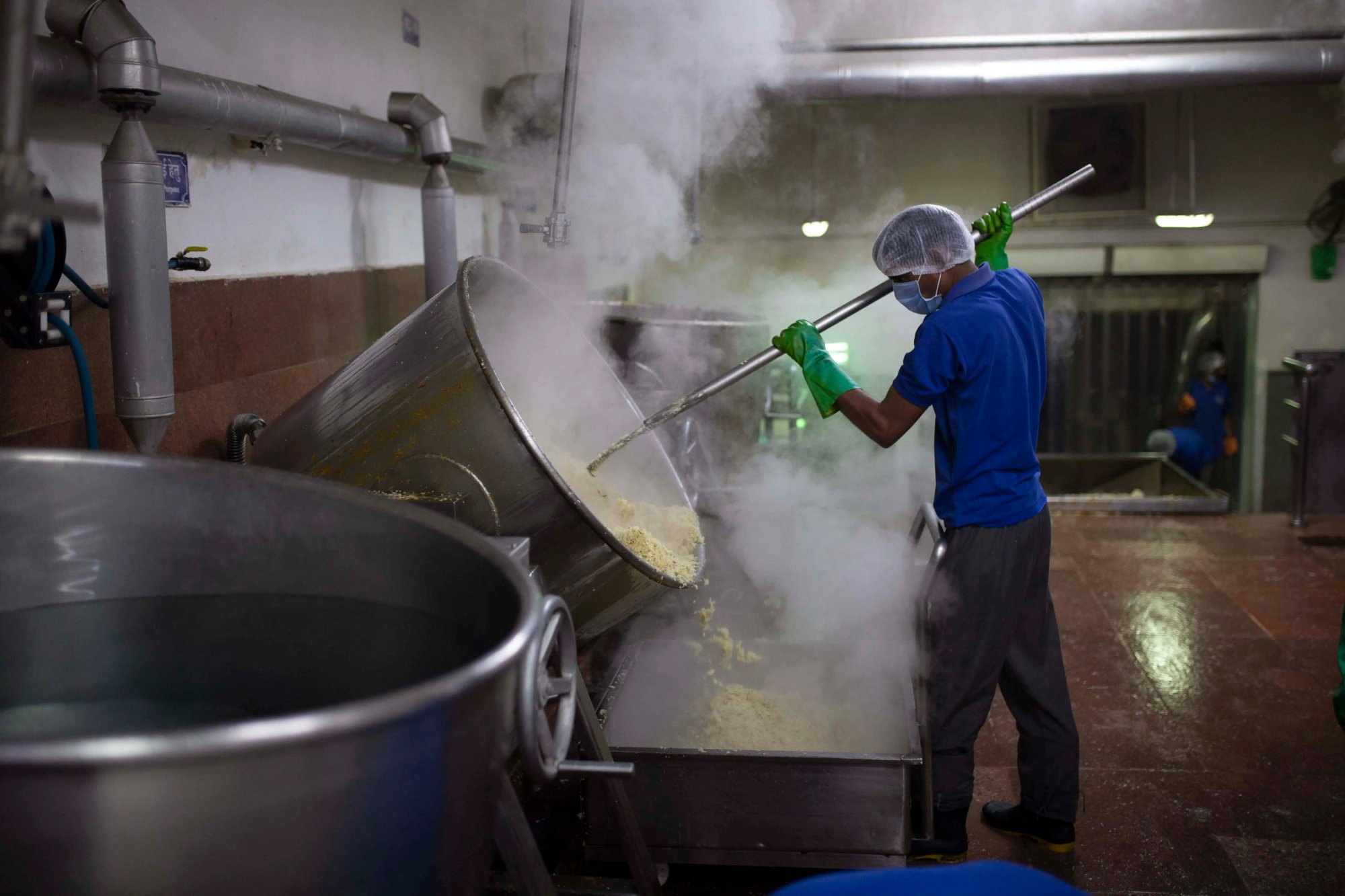
FIFO and FEFO storage protocols ensure freshest ingredients are used first. Every meal is cooked, packed in steam-sterilized SS 304 vessels, loaded in honeycomb-insulated vehicles, and delivered within four hours — keeping food safe, hot, and nutritious.
Vessel & Vehicle Design
Steam-sterilized SS 304 vessels
Puffed body insulation
Honeycomb hold structure
Heat & dust insulated vehicles
GPS route optimized
Temperature maintained en route
Support the Mission
Every Donation Powers a Kitchen
Your support keeps kitchens running, quality standards high, and meals reaching children who need them most — every school day.